
RC Bacolod celebrates Fellowship, Awards and Recognition Night
The Rotary Club of Bacolod Officers and Members led by Life-changing President Pauline Cuaycong capped off a great Rotary year with a Hawaiian Luau- inspired Fellowship Dinner and Recognition Ceremony. The event on March 26, 2022 was held at the resort-style residence of the Familiarans, the active Rotarian father and son tandem of Past President

By Staff Writer
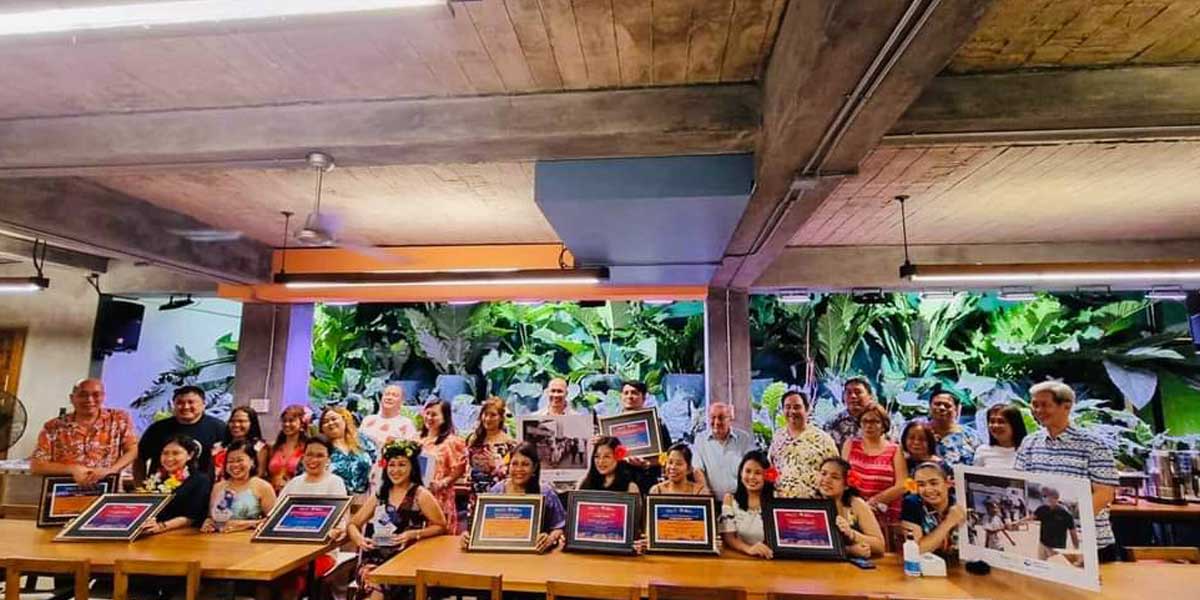
The Rotary Club of Bacolod Officers and Members led by Life-changing President Pauline Cuaycong capped off a great Rotary year with a Hawaiian Luau- inspired Fellowship Dinner and Recognition Ceremony.
The event on March 26, 2022 was held at the resort-style residence of the Familiarans, the active Rotarian father and son tandem of Past President El Cid Familiaran and President Elect Andre Familiaran.
Seasoned and new members alike enjoyed the festive program led by Rtn Chelah Jun Corpus and Rtn Emily Cuaycong.
The highlight of the evening was the Recognition Program for the officers and members who have actively participated in the club activities.
Also celebrated were the 15 awards given to the club by District 3850. Among which were the Life Changing Rotarian Awards, Most Outstanding Club, Outstanding President, Outstanding Club Secretary and prestigious outstanding awards of different Rotary Club of Bacolod projects headed by PDG Edgar Sy.
The fellowship fun gave tribute to the May birthday celebrants – Rotarians Emily Cuaycong, Biboy Yap, Sonrisa Fabelena and Shine Genzola.
President Pauline and the Rotarian ladies delighted everyone with their Hawaiian dance. Past President Jose Glenn de Guzman serenaded with wonderful songs along with Club Treasurer Rtn Michelle Medrano. (GMT)
Article Information
Comments (0)
LEAVE A REPLY
No comments yet
Be the first to share your thoughts!


