
PIDS Study: PH labor emigration, FDIs Benefit Manufacturing, Hurt Agriculture
By Francis Allan L. Angelo
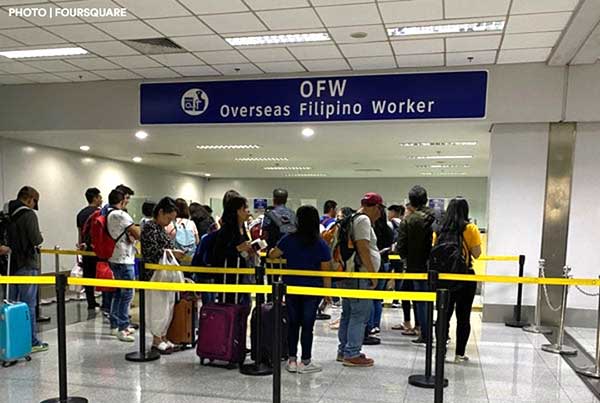
A study by the Philippine Institute for Development Studies (PIDS) has revealed that labor migration and foreign direct investments (FDI) have had uneven impacts on the Philippine economy, disproportionately benefiting capital-intensive sectors while leaving labor-intensive ones, like agriculture, at a disadvantage.
The study, authored by John Paolo R. Rivera and Tereso S. Tullao Jr., used data from 1991 to 2021 to examine the effects of labor emigration and FDI on wages, employment, and production in the capital-intensive manufacturing sector and the labor-intensive agriculture sector.
The results showed that while FDI and labor migration have helped boost employment in the manufacturing sector, the agricultural sector has suffered from lower productivity and a lack of inclusivity.
Key findings show a stark contrast between the effects on manufacturing (representing the capital-intensive sector), and agriculture (representing the labor-intensive sector):
OFW Deployment:
– Increases wages in both sectors, but more pronounced in agriculture
– Boosts employment and weakly increases production in manufacturing
– Reduces employment and production in agriculture
While labor emigration has become an economic fixture of the Philippines, it’s not benefiting all sectors equally. The agricultural sector, in particular, seems to be losing out.
Remittances:
– Decrease wages and employment in both sectors
– Have an ambiguous impact on manufacturing production
– Significantly reduce agricultural production
Remittances can create a culture of dependency. They may increase reservation wages and reduce labor force participation, especially in agriculture.
Foreign Direct Investment (FDI):
– Increases wages, employment, and production in manufacturing
– Increases wages but reduces employment and production in agriculture
FDI flows are primarily directed to capital-intensive sectors like manufacturing. This can lead to a shift of labor from agriculture to manufacturing, potentially leaving the agricultural sector worse off.
The study also found that production levels in both sectors do not significantly impact FDI flows, suggesting that other factors like overall investment climate and economic policies play a more crucial role in attracting foreign investment.
Disadvantaged Agriculture
According to the study, remittances from Overseas Filipino Workers (OFWs), which amounted to over USD 32.54 billion in 2022, are often channeled toward consumption rather than investments, reducing their potential to enhance productivity in agriculture.
Additionally, foreign investments tend to flow toward capital-intensive industries, leading to job creation in manufacturing but limited support for labor-intensive sectors like farming.
“Remittances help our families survive, but they are not being invested in ways that benefit farming,” said Leo, a farmer from Iloilo, highlighting a key challenge addressed in the study. “We need support, but the money sent by my relatives abroad just goes to daily expenses.”
The PIDS study also found that, although the agricultural sector is the primary employer in rural areas, it has received minimal benefits from FDI, leading to stagnant production levels.
Employment and Manufacturing Boost
On the other hand, the manufacturing sector has seen employment growth, partly due to FDI inflows and labor migration.
OFW deployment has led to a reduction in the domestic labor force, resulting in an increase in wages for those who remain.
However, despite rising wages, manufacturing production has not experienced a corresponding rise due to limited capital inputs.
“The work abroad is a better opportunity, but it also leaves fewer workers here,” said Maria, an OFW from Bacolod, echoing the study’s findings that deployment reduces available labor in the Philippines but raises wages in local industries. “It’s a trade-off for higher pay, but I know my community needs help to fill the gap.”
Policy Recommendations
The authors recommend recalibrating policies to foster more inclusive growth across both sectors:
- Complementing labor emigration with increased FDI to provide necessary capital across sectors
- Investing in education and skills training, especially for agricultural workers
- Enhancing government assistance to the agricultural sector
- Encouraging the redirection of remittances from consumption to savings and investment
The study suggested the need to make the Philippines more attractive to FDIs that will infuse the required capital for the labor force. But it also needs to ensure that these investments benefit all sectors, not just manufacturing.
The study called for policymakers to recalibrate development strategies to achieve more inclusive growth. It suggests creating non-farm employment opportunities in rural areas, investing in agricultural infrastructure, and promoting agribusiness and agritourism to boost the sector’s productivity and attractiveness.
It concluded that while labor migration and FDI have stimulated economic growth in certain areas, there remains an imbalance that disadvantages rural agricultural communities.
Addressing these gaps is key to achieving inclusive and sustainable development for the Philippine economy.
Comments (0)
LEAVE A REPLY
No comments yet
Be the first to share your thoughts!
Related Articles

[False, image manipulated] Davao City Mayor Baste Duterte ‘finally comes out of closet’
By KRISTINE BERNADETTE B. GANIGAN (Contributor) University of Santo Tomas Various social media posts mocked Mayor Baste Duterte and Senator Robin Padilla after the two figures expressed their support to one another following developments surrounding the Impeachment Trials of Vice President Sara Duterte, the former’s sister. A Facebook parody page, “Congressman Martin Negafuerta,” posted a

[Misleading] Blue: Favorite color of people with mental health issues?
By AIRA GRACE MARIE P. FERRER (Contributor) University of Santo Tomas A viral claim that is reviving a 1931 scientific result said that blue is the favorite color of people with mental health issues (including psychopaths). This type of claim seems common in pop psychology and continues to spread through social media and other media

[Misleading] New, improved ‘prediction model’ for earthquakes can predict tremors and their dates
By MACK LORENZ D. BERNARDO (Contributor) University of Santo Tomas The Facebook page Manila, Philippines Panganib sa Lindol claimed this: “A newly improved earthquake prediction model indicates a probability as high as 95% of a major earthquake occurring in certain parts of the Philippines within 36 hours, on Monday, October 5, 2026.” This claim is