
Breast milk as first human food seen important in food system
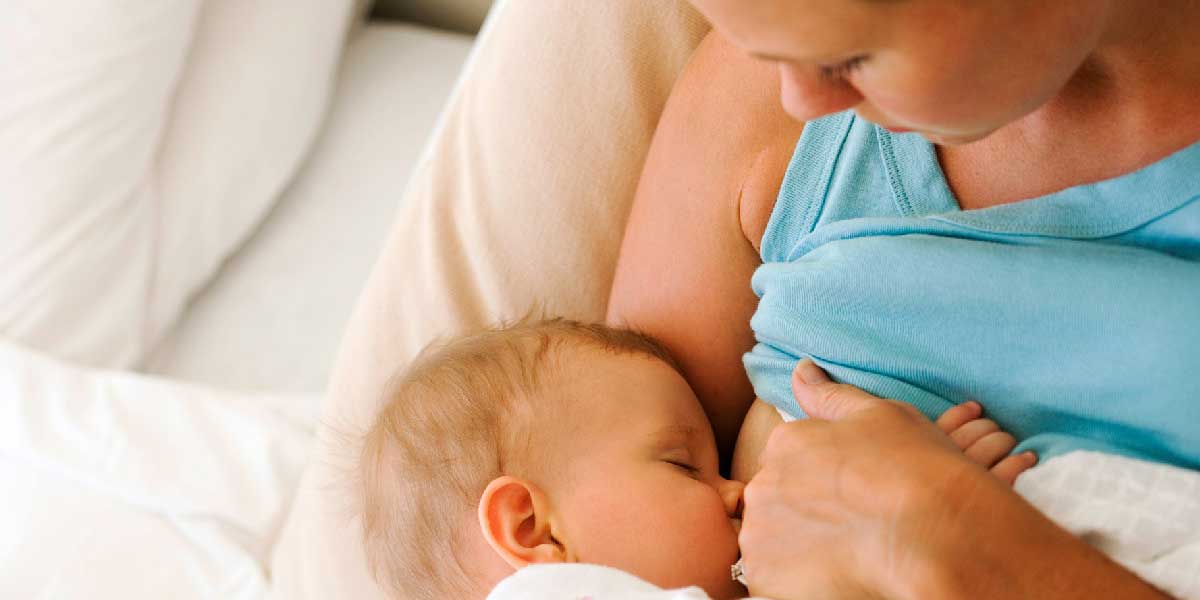
A roundtable discussion shone a spotlight on breastfeeding as the first food system and the importance of the mother’s milk as the first food of newborn humans.
Jointly organized by the Southeast Asian Regional Center for Graduate Study and Research in Agriculture (SEARCA) and LATCH Los Baños (LATCH LB) and supported by Kalusugan ng Mag-Ina, Inc. (KMI) and Arugaan, the online forum revisited current health systems through first-hand accounts of experts and grassroots community workers on pediatric education, re-lactation, and optimal infant feeding practices.
Breastfeeding is not just about the product that is the mother’s milk, but also the process wherein the mother serves as the primary food producer, explained Dr. Maria Asuncion Silvestre, KMI President.
“Breastfeeding is essentially the first food of the human body,” Dr. Silvestre said.
She also explained that the first food for the first 1,000 days of an infant starts in utero, while the infant is still in the womb, hence ensuring the health of the mother is also important.
SEARCA Director Dr. Glenn B. Gregorio, who is also a United Nations (UN) Food System Champion, asserted that the discourse on food and nutrition needs to level-up but must start at a mother level.
Arugaan Executive Director Ines Avellana-Fernandez pointed out that mothers need to be aware of the Philippine Milk Code (Executive Order 51) to protect mother and child from “predatory marketing practices of formula companies.”
According to Dr. Magdalena Whoolery, International Baby Food Action Network (IBFAN) and La Leche League Leader, breastfeeding is a form of human rights both by the mother and child.
She said human rights should come first over profit. She talked about the struggles and challenges “because of the unethical and aggressive marketing actions of industries that undermine breastfeeding” and “industry proxies coercion with local government officials and institutions to ‘donate’ formula and highly processed food to the population for market capture.”
Sharing her experiences as a human rights worker, Ms. Avellana-Fernandez also talked about best practices gleaned from the Typhoon Yolanda response, among them creating mother-child friendly spaces, providing on-site lactation and re-lactation counseling and breastfeeding management support, and mobile kitchens led by mothers.
This was affirmed by Dr. Whoolery, who discussed how human rights should come first in protecting breastfeeding, especially in disaster and emergency situations like the COVID-19 pandemic. She said breastfeeding can mean the difference between life and death, thus breastfeeding and mothers should be a priority among food and health ambassadors across the globe.
“We need to help mothers in pregnancy and postpartum recovery. We need to demand for long-term health of mother protection against diseases, especially COVID-19,” Dr. Gregorio said.
Noting the production and consumption always comes to mind when the subject is food system, Dr. Gregorio stressed that the best example is “the wonderfully made food production system that starts from a mother for her child.
Comments (0)
LEAVE A REPLY
No comments yet
Be the first to share your thoughts!
Related Articles

‘TIGBALIW PARA SA TANAN’: Alice Tan Gonzales brings Hiligaynon stories to wider audience
Hiligaynon writer Alice Tan Gonzales is opening a window into West Visayan stories and culture with “Tigbaliw: A Self-Translation of Hiligaynon Short Stories Into English,” a collection of 10 of her works translated into English. The retired University of the Philippines Visayas (UPV) professor launched the book on Nov. 14 at

UP Visayas graduate wins statistics research award
University of the Philippines Visayas (UPV) statistics graduate Shan Rencis R. Fernandez placed third in the Best Student Paper Competition at the 2026 Philippine Statistical Association Inc. (PSAI) Annual Conference. The conference was held from Oct. 19 to 21 at the UP School of Statistics in Diliman, Quezon City. Fernandez’s paper, “Modeling Municipal Fisheries in

SEARCA, WFP advance Southeast Asia school meals roadmap
PHNOM PENH, Cambodia – The Southeast Asian Regional Center for Graduate Study and Research in Agriculture (SEARCA) and the World Food Programme (WFP) brought regional partners together to review school meal programs and develop priorities for an ASEAN action roadmap. The Oct. 19-20, 2026, workshop aimed to strengthen cooperation on sustainable school feeding, with potential