
12 BOC Offices are now ISO 9001:2015 certified
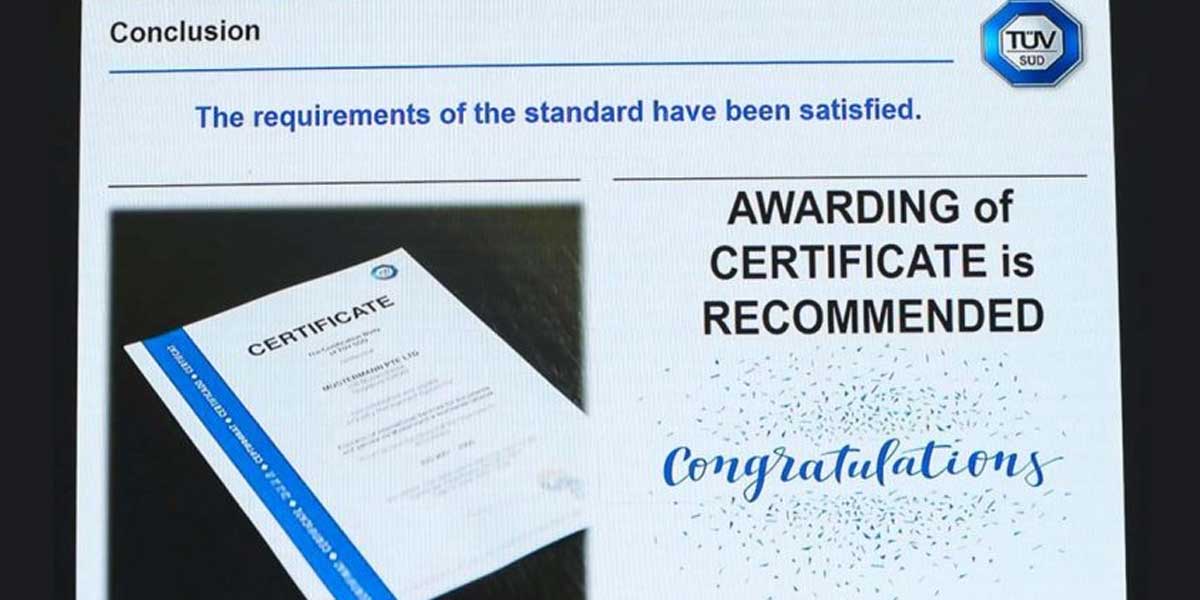
As part of the Bureau of Customs’ (BOC) reformation agenda, twelve (12) ports and offices are now ISO 9001:2015 Quality Management System (QMS) certified.
This is aligned with BOC’s 10-Point Priority Program for 2022, pursuing Integrity Development and Quality Management for all offices and ports under the Bureau.
The ISO 9001:2015 is a widely known and internationally accepted standard for quality management and recognizes organizations with a QMS that consistently provide services that meet customer and regulatory requirements.
Within the first quarter of 2022, two of BOC’s Customer Care Centers (CCC) had already been certified. This includes CCC Subic and Limay who were awarded with the ISO QMS certificate by the External Auditors – TUVSUD upon successfully satisfying the requirements of ISO 9001:2015 QMS on January 18 and March 9, 2022, respectively.
The BOC-Port of Legazpi also obtained its ISO Certification on March 15, 2022.
Moreover, the Subport of Mactan was able to pass the 1st External Surveillance Audit on February 23, 2022.
Meanwhile, the Port of Batangas will undergo their 3rd Recertification Audit on March 31, 2022.
The Port of Tacloban also aims to ace the External Audit Stage 2 and acquire another ISO Certification for BOC which is scheduled on April 11, 2022.
The ISO Certification of BOC offices and units proves that the BOC’s standardized processes are consistently followed.
Comments (0)
LEAVE A REPLY
No comments yet
Be the first to share your thoughts!


