
UPD-CS scientist co-invents defense vs. invasive alien species
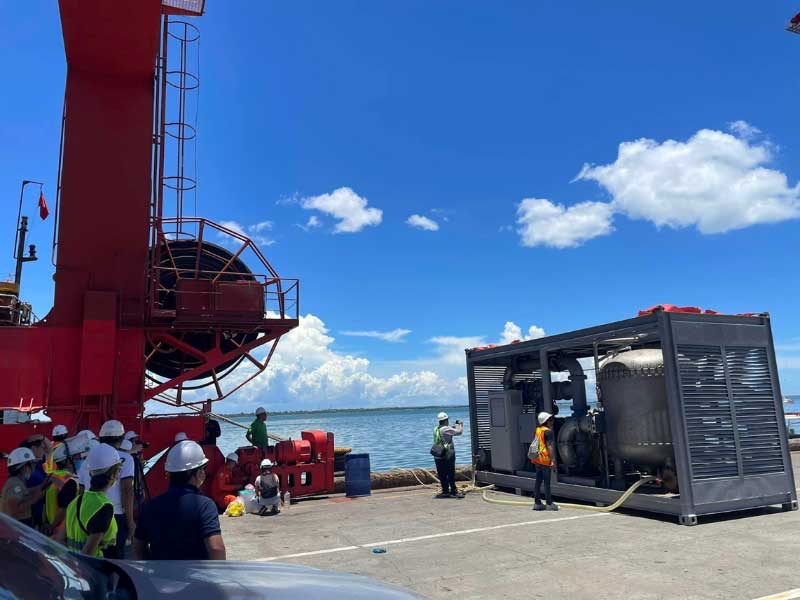
All over the world, cargo ships and other large vessels routinely fill their ballast tanks with seawater to help keep afloat on rough seas. This ballast water is usually released at the ship’s destination, bringing with it invasive animals, plants, microorganisms and other alien species that can devastate local marine biodiversity and coastal ecosystems.
Such invasive alien species have cost over US$1.1 trillion worth of damage worldwide between 1960 and 2022 alone, according to an international study. The cost of managing invasions has cost the world an estimated US$95.3 billion since 1960.
This global problem prompted scientists from the University of the Philippines – Diliman College of Science (UPD-CS) and the University of Cebu to invent a port water treatment system that costs just ₱12 million or only around $200,000—a small fraction of the cost of other commercially-available systems, which can run as high as US$5 million.
“Our system utilizes UV sterilization and mechanical methods to treat ballast water, and has proven promising in initial tests in decreasing the number of invasive species translocated from port to port,” said the system’s co-inventor, UPD-CS Institute of Environmental Science and Meteorology (IESM) Professor and Ballast Water and Biofouling Management Research Program Leader Dr. Benjamin Vallejo Jr.
“It complies with the IMO D-2 standard for ballast water treatment and can be used until the local industry can install its own onboard treatment systems,” he added.
This is a very timely invention considering that, in 2018, the Philippines ratified the IMO’s 2004 Ballast Water Management Convention, which imposes regulations on the proper handling and treatment of ballast water. Thus, Philippine ships constructed after 2018 are mandated to have a port ballast water treatment system. And by 2024, all ships are expected to treat their ballast water before release.
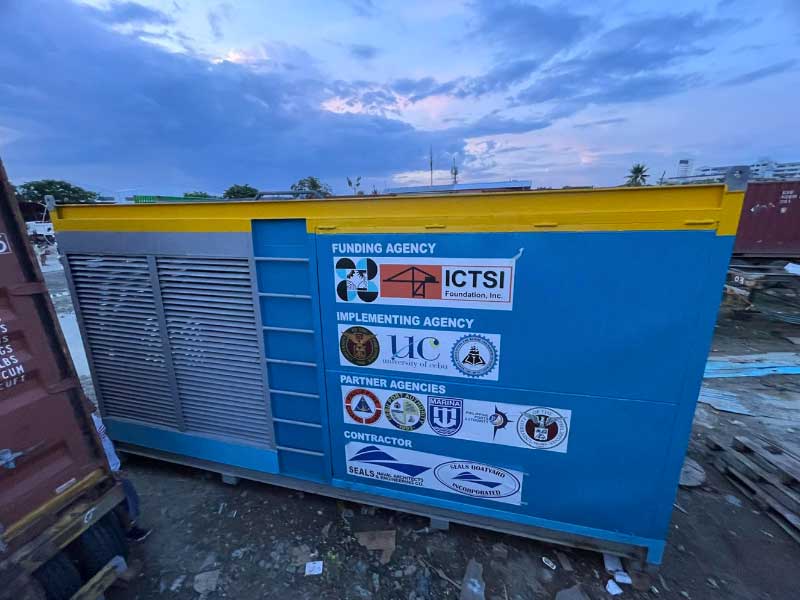
“We hope this treatment system will be cheaper than other costly comparable systems. Now is the opportunity for Filipino investors to break into Southeast Asia’s ballast water treatment market,” Dr. Vallejo urged.
Sources:
Ross N. Cuthbert et al. Biological invasion costs reveal insufficient proactive management worldwide. Science of The Total Environment, Volume 819, 2022. https://doi.org/10.1016/j.scitotenv.2022.153404
Ballast Water Management. International Maritime Organization. (n.d.). https://www.imo.org/en/ourwork/environment/pages/ballastwatermanagement.aspx
Comments (0)
LEAVE A REPLY
No comments yet
Be the first to share your thoughts!


