The limits of being smart
The most “intelligent” teacher I met in my early years of teaching could solve almost anything you threw at him—statistics, curriculum design, even budget headaches no one else wanted to touch. Students admired him. We relied on him. If there was a problem, people would say, “Ask Sir, he’ll figure it
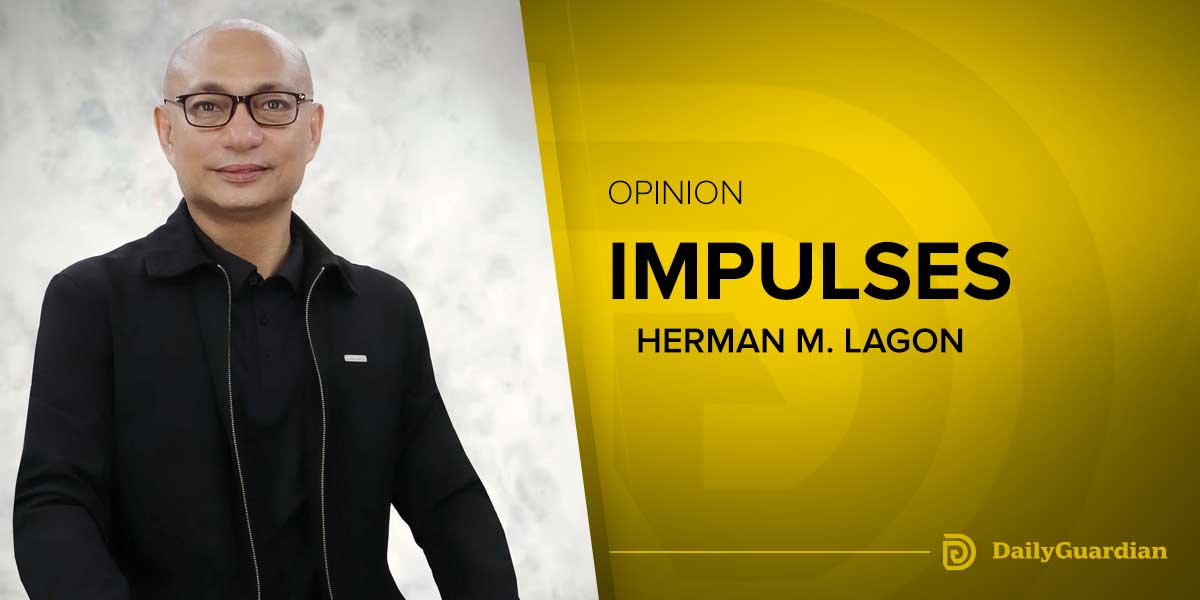
By Herman M. Lagon
By Herman M. Lagon
The most “intelligent” teacher I met in my early years of teaching could solve almost anything you threw at him—statistics, curriculum design, even budget headaches no one else wanted to touch. Students admired him. We relied on him. If there was a problem, people would say, “Ask Sir, he’ll figure it out.” But one afternoon, a quiet student stopped showing up. He shrugged it off—“probably just not serious.” Weeks later, we found out the student had been working night shifts to help his family get by. That stayed with me. The teacher had the numbers, the logic, the credentials—but he missed the human part. Intelligence solved the problem. Wisdom might have noticed the person.
We tend to mix up intelligence and wisdom because, on the surface, they look the same. Both fall under that vague label of “being smart.” But intelligence is easier to spot. It is in report cards, diplomas, Latin honors, board scores, fluent English, quick answers. It is what schools reward and what job interviews look for. Psychologists generally describe intelligence as the ability to learn, reason, and solve problems. Wisdom is harder to point to. It does not always speak first. It does not rush. It lingers quietly, asking not “What is the answer?” but “What should be done?” In a system that values scores, this often goes unnoticed.
You can see the confusion in everyday life. There is that student who graduates with honors, lands a job in the city, starts earning well, and posts about productivity and growth. Nothing wrong there. In fact, it is something many families are proud of. But a few years later, the same person starts feeling worn out, disconnected, unsure why everything feels heavy despite the success. Intelligence helped open doors. Wisdom might have paused earlier and asked: Where is this leading me? A piece in the British Journal of General Practice puts it simply—intelligence is about achieving goals, while wisdom is about knowing which goals are worth pursuing. (Armitage, 2022).
Inside classrooms, this difference is hard to miss. A teacher can follow the lesson plan perfectly and still overlook what is right in front of them—the student who skipped meals, the one carrying problems from home, the one acting out just to be seen. Intelligence says, “Finish the lesson.” Wisdom pauses and asks, “What is going on here?” Research shows that strong, trusting relationships in schools are linked to better student learning outcomes (Bryk & Schneider, 2002). Sometimes, the lesson they remember most is kindness.
In everyday situations, it is easy to see. Intelligence explains things. Wisdom reads situations. Intelligence pushes arguments. Wisdom knows when to stop. Many mistakes happen not from ignorance, but from ignoring better judgment.
Online spaces make this clearer. Information is abundant, but depth is rare. Research shows that emotionally charged posts tend to spread faster online (Brady et al., 2017). So louder voices win, even when they lack perspective. Being correct is not always enough.
Typical reactions capture this well. Lines like “Ikaw na ang matalino” often carry mixed feelings. It is not intelligence people resist, but how it feels. Research shows that wisdom involves empathy and perspective-taking (Grossmann et al., 2020), which often makes ideas easier for others to receive. It is not just about knowing. It is about how you show it.
This becomes even more important in leadership. Some of the worst decisions in history were made by people who were, by all standards, highly intelligent. They could analyze, plan, and justify their choices. But something was missing. Intelligence can build systems, predict outcomes, and make things efficient. But it does not automatically ask whether those systems are good for people. As Armitage (2022) argues, intelligence is concerned with how to achieve goals, whereas wisdom is concerned with which goals should be pursued. That gap can be small in theory, but huge in real life.
For many teachers, this tension is familiar. There is pressure to look prepared all the time, to stay in control, and to avoid saying, “I do not know.” Yet those who truly understand their craft often know how much more there is to learn. Research shows that people with lower competence tend to overestimate their abilities, while those with greater expertise are more aware of their limits (Dunning, 2011). Wisdom creates space for that kind of honesty. It lets a person ask, listen, pause, and admit when certainty is not the point.
There is also wisdom that passes almost unnoticed because it looks simple. A teacher sees a student withdrawing and checks in after class. A coworker decides not to inflame a misunderstanding. A parent listens first before giving advice. No spotlight follows those choices. They are ordinary, almost invisible. Yet they often hold relationships together. Research on wisdom highlights perspective-taking, humility, and the ability to weigh different sides of a situation (Grossmann et al., 2020). It is not about being dazzling. It is about being steady when it counts.
Intelligence remains important. It teaches us how to analyze, build, and solve. It moves progress. But it cannot do everything alone. It may help a person answer fast, but not always answer well. It may create options, but not always judgment. The better question is whether intelligence is growing roots. For intelligence helps us manage complexity. Wisdom helps us manage ourselves. One can make us capable; the other makes us careful. And when the world gets loud with pressure and ambition, it is often wisdom that pulls us back just enough to ask, “Is this the path I really want to keep taking?”
***
Doc H fondly describes himself as a “student of and for life” who, like many others, aspires to a life-giving and why-driven world grounded in social justice and the pursuit of happiness. His views do not necessarily reflect those of the institutions he is employed or connected with.
Comments (0)
LEAVE A REPLY
No comments yet
Be the first to share your thoughts!
Related Articles
Western Visayas grows fast, but builds too little
In 1960, the Philippines boasted a real gross domestic product per person of USD 1,124, sitting comfortably ahead of South Korea. Today, South Korea has skyrocketed past USD 37,000 while the Philippines struggles below USD 4,000. The Filipino household has spent the last six decades acting as the shock absorber