
Solar surge halts fossil fuel generation rise globally
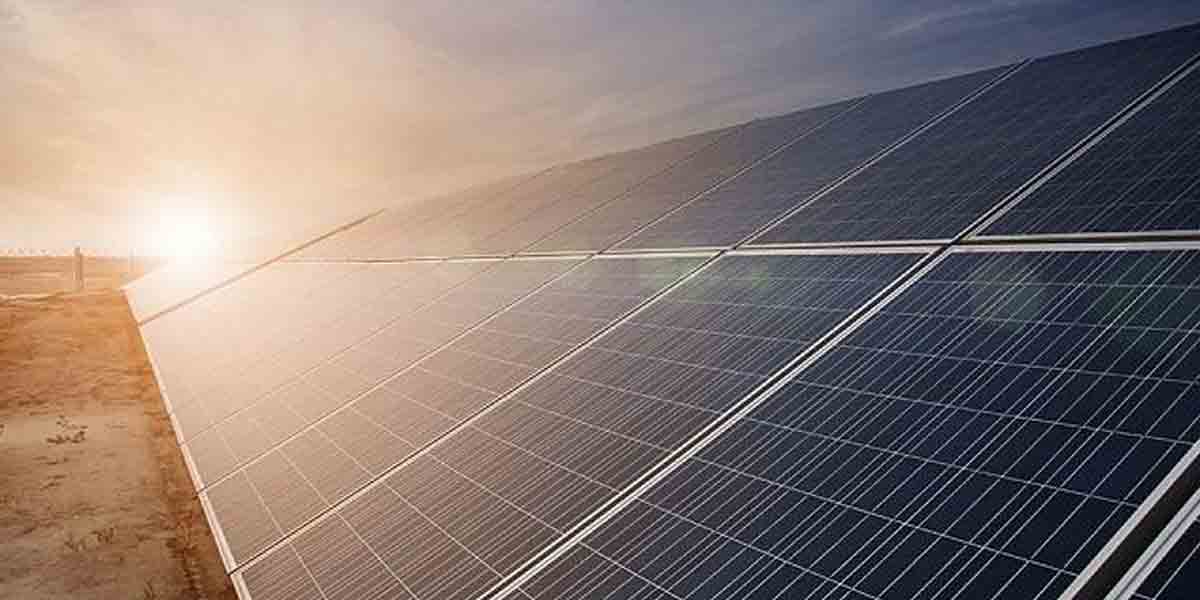
Record solar power growth drove clean electricity sources to meet all new demand worldwide in 2025, halting the rise of fossil fuel generation for the first time since the COVID-19 pandemic, according to a report released April 21 by energy think tank Ember. The Global Electricity Review 2026, Ember’s seventh
By Francis Allan L. Angelo
By Francis Allan L. Angelo
Record solar power growth drove clean electricity sources to meet all new demand worldwide in 2025, halting the rise of fossil fuel generation for the first time since the COVID-19 pandemic, according to a report released April 21 by energy think tank Ember.
The Global Electricity Review 2026, Ember’s seventh annual assessment analyzing data from 215 countries, found that low-carbon power generation increased by 887 terawatt-hours (TWh) in 2025, outpacing electricity demand growth of 849 TWh. Fossil generation recorded a small decline of 38 TWh, or 0.2%.
Solar power alone met 75% of the net increase in global electricity demand, with a record generation increase of 636 TWh to reach 2,778 TWh in 2025 — a 30% jump from 2024 and the highest growth rate in eight years. Together with wind, the two sources met 99% of demand growth.
“We have firmly entered the era of clean growth. Clean energy is now scaling fast enough to absorb rising global electricity demand, keeping fossil generation flat before its inevitable decline. The momentum we are seeing is no longer just an ambition, it is becoming a structural reality,” said Aditya Lolla, Ember’s interim managing director.
China contributed more than half of the global increase in both solar capacity and solar generation in 2025. China’s solar capacity deployment of 378 gigawatts (GW) made up 58% of global solar installations, while its wind installations of 119 GW accounted for 72% of global deployment.
The share of solar and wind in China’s generation mix reached 22%, surpassing the OECD average of 20%.
In a historic reversal, fossil generation fell in both China and India — the largest and third-largest fossil power countries — for the first time this century. China’s fossil output dropped 56 TWh, or 0.9%, while India’s fell 52 TWh, or 3.3%.
India installed more new solar capacity than the United States for the first time. Renewable generation growth in India doubled its previous record, with solar rising 53 TWh, or 37%, and wind increasing 22 TWh, or 28%.
Renewables overtook coal power in the global electricity mix for the first time in 100 years. Renewable sources — solar, wind, hydropower, and others — reached 33.8% of global generation at 10,730 TWh, while coal power fell to 33.0% at 10,476 TWh.
Coal generation dropped 63 TWh, or 0.6%, in 2025, falling below a third of global generation for the first time in history. Asia remains the only region where coal still exceeds renewables, at 52% versus 32%.
Global solar generation has grown more than tenfold in the decade since 2015, when output was just 256 TWh. Solar overtook wind power for the first time globally in 2025 and drew close to nuclear power, with both solar and wind expected to surpass nuclear in 2026.
Battery storage costs fell 45% in 2025, following a 20% drop in 2024, while deployment grew 46% to an estimated 250 GWh. The world installed enough battery capacity to shift 14% of new solar generation from midday to other hours of the day.
Chile and Australia installed enough grid-level storage to shift over 50% of new solar generation in 2025, already seeing benefits in lower power prices and reduced curtailment.
Global electricity demand grew 2.8%, or 849 TWh, in 2025, broadly in line with the ten-year average of 2.7%. The increase represented the sixth-largest absolute annual rise ever recorded.
Global power sector emissions in 2025 remained nearly flat compared to 2024, declining 6 megatons of carbon dioxide equivalent (MtCO2e), or 0.04%. The average emissions intensity fell to 458 grams of CO2 equivalent per kilowatt-hour, down 2.7% from 471 gCO2e in 2024.
“Solar has been the dominant driver of change in the global power system, and along with battery storage, it is opening a path to fast-scaling, round-the-clock clean power,” Lolla said.
“Clean energy is rapidly redefining the foundation of energy security in a volatile world. It is already helping countries reduce exposure to fossil fuel imports and costs while meeting rising electricity demand. The next step is to modernise grids and regulatory frameworks so power systems are ready to handle this new reality,” he added.
The report noted that the structural shift is occurring as the global energy system contends with two major fossil fuel supply disruptions in four years: Russia’s invasion of Ukraine and the US-Israel war with Iran.
Solar capacity additions reached a new record of 647 GW in 2025, an 11% increase from 582 GW in 2024.
Article Information
Comments (0)
LEAVE A REPLY
No comments yet
Be the first to share your thoughts!
Related Articles

From Guimaras to Europe: A ‘Patikim’ of Philippine Mango Excellence
The Department of Trade and Industry Region VI, through DTI-Guimaras and in coordination with the DTI Supply Chain and Logistics Group, launched a technical test shipment of fresh Guimaras mangoes to Europe during a send-off ceremony on June 11, 2026. The pilot shipment consisted of 100 kilograms of fresh Guimaras mangoes bound for Brussels, Belgium,

DOLE job fair delivers jobs in Western Visayas
Freedom found expression in jobs, livelihood opportunities and accessible government services as the Department of Labor and Employment in Western Visayas brought together jobseekers, workers and partner agencies for the Trabaho Agad Job Fair and simultaneous service delivery activities on June 12, 2026 in Iloilo City. The activity was held in celebration of the 128th

Guimaras low-income inflation hits 4.7% in May
Inflation for the bottom 30% income households in Guimaras rose to 4.7% in May 2026 from 4.0% in April, bringing the province’s year-to-date inflation rate to 1.1%, the Philippine Statistics Authority said. “In comparison, inflation was lower at 0.4 percent in May 2025,” Provincial Statistics Officer Nelida B. Losare said. The May 2026 inflation rate