
Residents face eviction for palm oil plantation
By Juliane Judilla
By Juliane Judilla
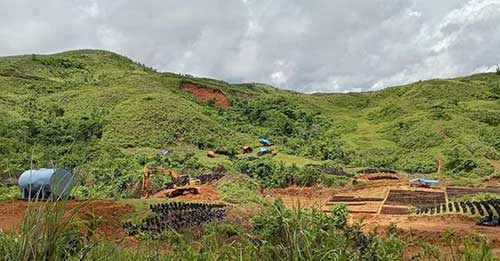
Residents of Barangay Gatuslao, Agboy, and Payauan in the Municipality of Candoni, Negros Occidental, face displacement to make way for a PHP 2-billion palm oil plantation owned by the Consunji family, the same family that owns Semirara Mining and Power Corporation.
A series of bulldozing activities are underway in the area, forcing residents to leave their homes.
Some residents report that these activities have disrupted their livelihoods, despite assurances from the local government unit (LGU) through town councilor Dember Catipunan that the plantation would generate 3,000 jobs and provide better livelihood opportunities.
The residents argue that the sale and transfer of their 6,652-hectare forest land, which includes 4,000 hectares inhabited by Indigenous Peoples (IPs), is illegal.
On October 14, 2009, the Department of Environment and Natural Resources (DENR) issued an Integrated Forest Management Agreement to Hacienda Asia Plantation Incorporated (HAPI).
Residents question why the DENR approved reclassifying their land for palm tree cultivation.
Several NGOs and farmers’ groups have condemned the project.
The Paghidaet sa Kausawagan Development Group (PDG) stated that initial activities, such as hiring workers and preparing for seedling propagation, have already begun, despite ongoing queries and complaints.
The group also expressed concerns about the potential impacts of the project on the environment and local livelihoods.
Meanwhile, Kilusang Magbubukid ng Pilipinas (KMP)-Negros criticized the DENR, the LGU, and its environment committee for approving the reclassification without considering the project’s impact on the local population, their homes, livelihoods, and the environment.
According to reports, the project will last for 25 years and may be renewed for an additional 25 years.
Comments (0)
LEAVE A REPLY
No comments yet
Be the first to share your thoughts!


