
Quiet roads to gravitas
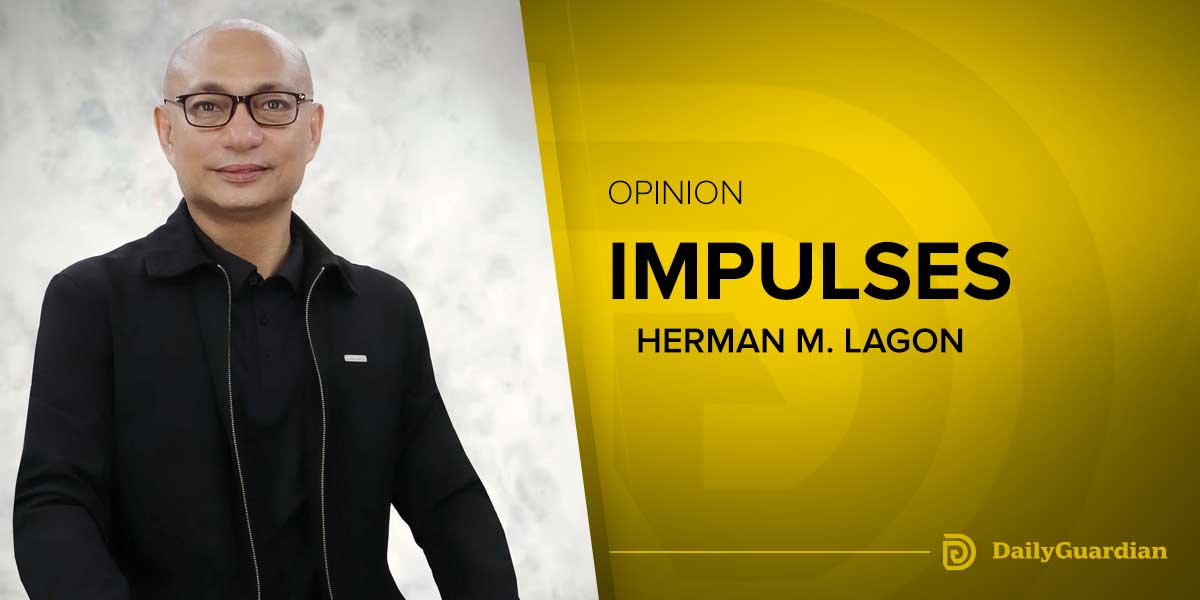
They say you know a leader has gravitas not by how loud they speak, but by how much weight their silence holds. That thought stuck with me as I sat across the table from my former co-administrators at Ateneo de Iloilo in our usual dinner at Buto’t Balat in Mandurriao, Iloilo
By Herman M. Lagon
By Herman M. Lagon
They say you know a leader has gravitas not by how loud they speak, but by how much weight their silence holds. That thought stuck with me as I sat across the table from my former co-administrators at Ateneo de Iloilo in our usual dinner at Buto’t Balat in Mandurriao, Iloilo City. We no longer ran daily operations together, but the conversation naturally turned—without fanfare—to what it really means to lead. Not manage. Not perform. Lead—with presence, clarity, and that quiet kind of force that fills a room without trying. One of us, half-laughing, asked, “Whatever happened to gravitas?” The room chuckled knowingly, then fell into that kind of pause that says, yes, that word still means something.
Gravitas does not trend. You will not hear it in catchy seminar slogans or in HR buzzwords like “synergy” or “agile.” But it stays. Because it cuts deeper than trends. It is about substance, steadiness, and knowing how to hold a room, a moment, or a decision without needing a microphone. For those formed in what many of us know as the Ignatian tradition of leadership, gravitas is not a badge. It is a baseline.
Most of us value leaders who are warm, funny, and relatable. There is nothing wrong with that. Humor builds bridges. But when charm masks evasion, or when lightness replaces depth, something vital goes missing. Gravitas reenters—not loudly, but necessarily. It is the thoughtful pause before a tough call. It is the grounded posture of a leader who listens first.
Leadership grounded in reflection is slow to judge, quick to listen. In that tradition, decision-making is never a gut-check alone. It is a habit of tuning in—not just to feelings, but to values, to context, and to people. What we sometimes call “gut feel,” St. Ignatius of Loyola called discernment. But here, gut feel is tested. It asks not just “What feels okay?” but “What serves best?” and “Whose lives are we affecting here?” Gravitas grows in that space—where leadership stops being a spotlight and starts becoming a responsibility.
Think of a school head faced with an unpopular but needed change—say, a shift in schedules, a movement in supervisory roles, or stricter grading standards. A quick leader might push a memo. A passive one might delay it. But a leader with gravitas gathers the staff, listens, speaks plainly, and owns the fallout. That kind of leadership does not always win applause. But it wins trust. And trust, unlike likes or followers, endures.
This depth grows with humility. Not shyness. Clarity. A clear sense of who one is, and what one is not. Educators often carry this without calling it by name. I remember Ma’am Linda, a private school principal, who once said, “I walk into every meeting as the least important person—so I can hear what is.” She was not shrinking. She was sharpening. That, too, is gravitas.
This clarity is fed by hope—not a vague kind, but the kind that endures the slow days. Leaders who operate with this kind of hope are not just thinking of the next quarter. They are shaping the next decade. They calm down when politics shifts, when plans stall, when praise dries up. That hope fuels not just direction, but stability.
Gravitas also grows in daily self-checks. Not the performative kind. But the real review of how decisions land, how people respond, how patterns form. It is not vanity. It is accountability. And in a time when “pa-pogi points” still tempt even the most well-meaning, leaders who pause, review, and adjust are rare and needed.
Truth be told, gravitas can be lonely. It often means being the voice that says what no one wants to hear. It means risking misunderstanding. Sometimes, it means saying no when a yes would be easier. It means waiting for applause that may never come. But in that discomfort, something solid is formed.
That brings to mind a phrase I have always admired—”with and for others.” When taken seriously, it means standing beside people, not above them. It means rolling up sleeves, not just raising hands. St. Ignatius called on his peers not to escape the world, but to enter it. Gravitas is shaped in that tension—where reflection meets action.
Gravitas is not prestige. Prestige is handed out. Gravitas is built. Slowly. Through how one treats people when no one is watching. Through how one says the hard thing gently, or the gentle thing firmly. It lives in choices that go unposted, unnoticed, but not unfelt.
As I left that table, full of stories and quiet laughter, I thought of the young leaders I meet—so many unsure of themselves just because they are not loud, not flashy. I wish we told them more often: leadership is not performance. It is presence. Gravitas is not something you show off. It is something you grow. And you grow it from the inside out.
That might be the quiet gift of it: real leadership does not grab the spotlight. It holds it steady so others can see. That is gravitas. And we need it now more than ever.
***
Doc H fondly describes himself as a “student of and for life” who, like many others, aspires to a life-giving and why-driven world grounded in social justice and the pursuit of happiness. His views do not necessarily reflect those of the institutions he is employed or connected with.
Article Information
Comments (0)
LEAVE A REPLY
No comments yet
Be the first to share your thoughts!
Related Articles

What’s happening to our schools?
First, two student-athletes died in a military-style boot camp at the beginning of the month. This week, three students died and 20 others were injured in what could be the worst school shooting incident in the country. What’s happening to our schools? This is the question that haunts the nation today.
