
PSA opens Registration Centers for PhilID in Aklan
KALIBO, Aklan – The Philippine Statistics Authority-Aklan recently opened several registration centers in the province to enroll all Aklanons in the Philippine Identification System. The establishment of registration center was in coordination with various local government units to make the service closer and accessible to the people. Eleven registration centers were already established in the

By Staff Writer
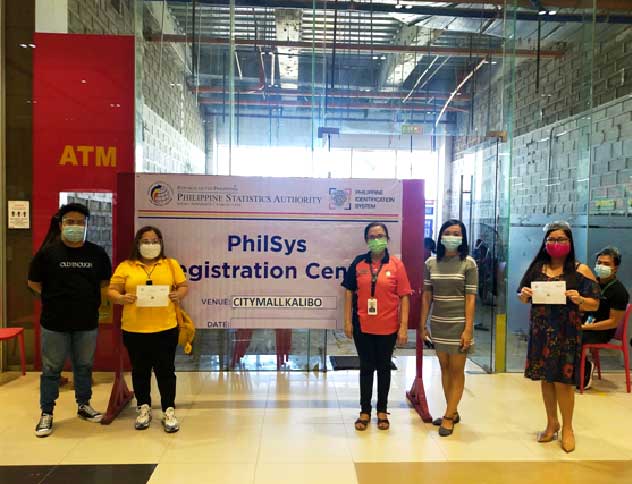
KALIBO, Aklan – The Philippine Statistics Authority-Aklan recently opened several registration centers in the province to enroll all Aklanons in the Philippine Identification System.
The establishment of registration center was in coordination with various local government units to make the service closer and accessible to the people.
Eleven registration centers were already established in the municipalities of Altavas, Batan, Buruanga, Ibajay, Kalibo, Malay, Madalag, Makato, Nabas, Numancia and Tangalan.
Priority registrants being catered in the center are those from sample barangays whose demographic data were already collected through house-to-house visit last January to April 2021.
According to Engr. Antonet Catubuan, 32,991 persons were already registered in the province since the PhilID registration started.
Kalibo recorded the highest registration with 9,303, followed by Buruanga (4,614), Malay (4,543), Ibajay (3,250), Nabas (2,795), Madalag (2,225), Numancia (1,543), Altavas (1,318), Batan (1,291), Makato (1,193), and Tangalan (916).
Meanwhile, online booking for appointments in Step 2 Registration for the municipalities of Buruanga, Kalibo and Malay are already available.
Interested registrants may access the website https://register.philsys.gov.ph and input the respective demographic information to book for an appointment.
Article Information
Comments (0)
LEAVE A REPLY
No comments yet
Be the first to share your thoughts!


