
Project to build resilient, sustainable forest management areas continue to reap benefits
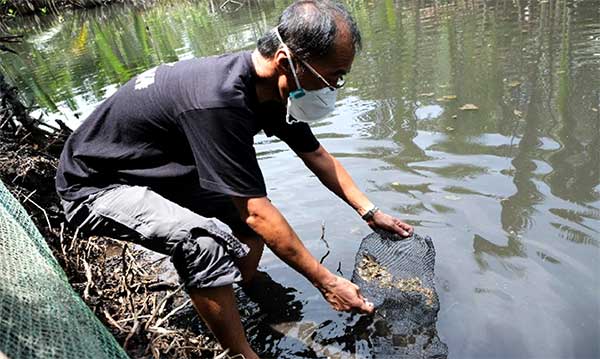
A project that aims to build resilient and sustainable community-based forest management areas continues to reap accomplishments in its 2nd year of implementation.
The “Agroforestry Support Program for Enhancing Resiliency of Community-Based Forest Management Areas (ASPIRE-CBFM),” a three-year project led by the University of the Philippines Los Baños (UPLB) is funded and monitored by the Philippine Council for Agriculture, Aquatic and Natural Resources Research and Development of the Department of Science and Technology (DOST-PCAARRD).
The ASPIRE-CBFM Program has three project components in four CBFM sites in CALABARZON: Liliw, Laguna; Rosario and Magallanes, Cavite; and Infanta, Quezon.
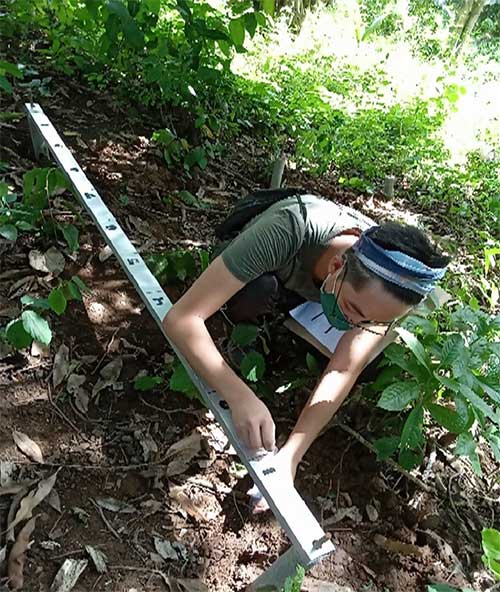
One of the accomplishments of the project is the establishment of agroforestry model farms based on the local adaptive capacity and biophysical conditions of the CBFM sites. These include the vegetable-based agroforestry systems in Liliw, Laguna; fruit tree-based agroforestry systems in Rosario, and Magallanes, Cavite; and Aquasilviculture system in Infanta, Quezon were growing various aquatic produce such as king crab, samaral and milkfish.
To come up with baseline data on the ecological status of the CBFM sites, the project team from Ecosystems Research and Development Bureau of the Department of Environment and Natural Resources (DENR-ERDB) developed biophysical profiles on soil erosion, water quality and quantity, and carbon stock through coordination with other concerned agencies, reconnaissance survey, field data gathering (soil and water samples collection, flora and fauna assessment, spatial survey) and laboratory analyses.
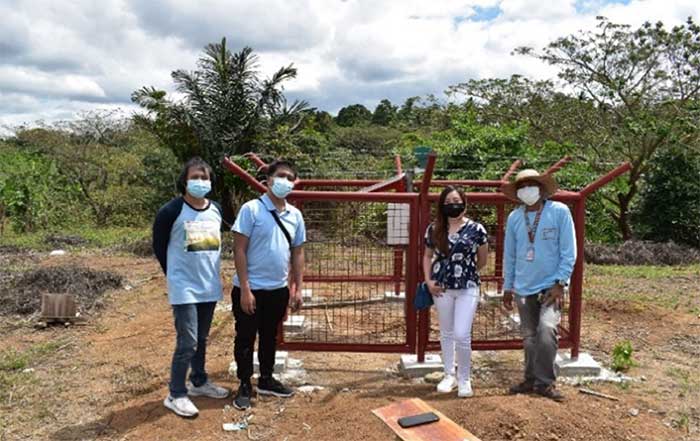
To strengthen the capacity of beneficiaries towards sustainability and resiliency, the DOST-IVA project team installed one Local Government Unit Information Dissemination System (LGUIDS), three automated rain gauges. One EWS (Early Warning System) and one Water level Monitoring System (WLMS) will also be installed for the CBFM sites.
These accomplishments were reported during the monitoring and evaluation activity of DOST-PCAARRD led by its Technology Transfer and Promotion Division (TTPD) (Engelbert R. Lalican, Engr. Eman Noel G. Cañada, DOST-PCAARRD S&T Media Services)
Comments (0)
LEAVE A REPLY
No comments yet
Be the first to share your thoughts!
Related Articles

One Year After the Flood-Control Speech: Probes, Protests, and the President’s Possible Culpability
Philippine Center for Investigative Journalism One year after President Marcos shamed officials and contractors whom he said stole from government-funded flood-control projects, the country has yet to come to grips with the scale of the thievery and who, at the highest levels of power, were responsible. The amounts involved are staggering. Senator

