
Philippines secures JICA funds for major infra projects
The Philippines, represented by Finance Secretary Ralph G. Recto, has finalized financing agreements with the Japan International Cooperation Agency (JICA) for two key infrastructure initiatives. These projects are a cornerstone of President Ferdinand R. Marcos, Jr.’s “Build Better More” program, aimed at catalyzing inclusive growth across the country. At a ceremonial signing in Makati on

By Staff Writer
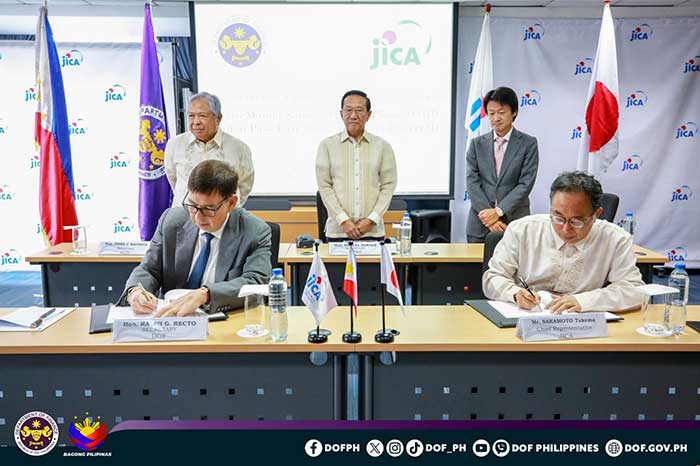
The Philippines, represented by Finance Secretary Ralph G. Recto, has finalized financing agreements with the Japan International Cooperation Agency (JICA) for two key infrastructure initiatives.
These projects are a cornerstone of President Ferdinand R. Marcos, Jr.’s “Build Better More” program, aimed at catalyzing inclusive growth across the country.
At a ceremonial signing in Makati on March 26, 2024, Secretary Recto underscored the significant economic impact of such investments, saying, “As for every peso invested in new infrastructure, two pesos and thirty centavos are infused into the national economy.”
These infrastructure developments, he asserted, are not just about enhancing mobility but are vital in job creation and business opportunities, acting as catalysts for equitable economic progress.
Recto and JICA Chief Representative Takema Sakamoto inked the third tranche of financing for the Metro Manila Subway Project (MMSP) Phase 1, valued at approximately PHP 55 billion.
Totaling PHP 488.48 billion, the MMSP Phase 1 is the Philippines’ first underground mass transport system and a significant venture in the administration’s infrastructure plan.
Scheduled to begin operations in 2029, the subway promises a drastic cut in travel time between Valenzuela and NAIA, accommodating an estimated 519,000 passengers daily. This project follows two previously signed tranches, ensuring continued financial momentum.
Additionally, the loan agreement for the first tranche of the Dalton Pass East Alignment Road Project (DPEARP) was confirmed, amounting to around PHP 37 billion. The project will introduce a 23-kilometer road intended to enhance connectivity in Central and Northern Luzon, facilitating safer transport and aiding the local agriculture sector.
JICA has offered the Philippines highly concessional financing terms for both projects under its Special Terms for Economic Partnership (STEP), featuring low-interest rates, a 40-year repayment period, and a 10-year grace period.
Moreover, these projects will incorporate Japanese technological expertise, focusing on innovation, sustainability, and resilience against natural disasters.
Recto thanked JICA for its steadfast partnership and reiterated the Department of Finance’s commitment to facilitating these transformative infrastructure projects. He also highlighted regular worksite visits to ensure the progress and efficiency of project implementation.
The Finance Secretary also expressed an ambitious vision for the nation’s economy, citing these projects as stepping stones for the Philippines’ goal to become an upper-middle-income country by 2025 and a major global economy by 2075.
JICA’s Sakamoto commended the projects, heralding them as landmarks of Japan-Philippines cooperation and symbols of economic advancement for the “Bagong Pilipinas.”
Present at the signing were key figures from the Department of Transportation, the Department of Public Works and Highways, and the Embassy of Japan, reflecting the broad support for these initiatives.
Article Information
Comments (0)
LEAVE A REPLY
No comments yet
Be the first to share your thoughts!


