Philippine restaurants near 80 percent cage-free egg commitment
MANILA — Nearly 80 percent of chain restaurant locations in the Philippines have committed to shifting to cage-free eggs, according to the 2025 Philippines Restaurant Industry Cage-Free Egg Scorecard released Feb. 18 by Lever Foundation. The scorecard shows that 47, or 70 percent, of 67 leading restaurant brands evaluated have
By Joseph Bernard A. Marzan
By Joseph Bernard A. Marzan
MANILA — Nearly 80 percent of chain restaurant locations in the Philippines have committed to shifting to cage-free eggs, according to the 2025 Philippines Restaurant Industry Cage-Free Egg Scorecard released Feb. 18 by Lever Foundation.
The scorecard shows that 47, or 70 percent, of 67 leading restaurant brands evaluated have pledged to fully transition to cage-free eggs, covering 11,277 locations nationwide.
That represents 78 percent of all chain restaurant locations in the country, the highest concentration in Asia.
The 67 brands assessed account for the vast majority of the Philippine dining landscape, including quick-service, casual dining and coffee chains with 20 or more outlets that responded to the survey.
Data from the scorecard summary indicate that two brands, representing 86 locations or 1 percent of total chain locations, have already achieved 100 percent cage-free egg implementation in the Philippines and earned an “A” rating.
Forty-four brands, equivalent to 66 percent of those evaluated and operating 11,079 locations or 76 percent of total sites, received a “B” rating for having a global 100 percent cage-free egg commitment with a set timeline.
One brand, accounting for 112 locations or 1 percent of total sites, earned a “C” rating for committing to 100 percent cage-free eggs in the Philippines but not globally.
Meanwhile, 20 brands, or 30 percent of those assessed, still have no cage-free egg policy in the Philippines. These companies operate 3,278 locations nationwide, equivalent to 23 percent of total chain restaurant sites.
Brands that have completed their transition to cage-free eggs include Nanyang, which finalized its 100 percent cage-free egg policy by 2024, and Peri-Peri, which completed sourcing 100 percent cage-free shell eggs by 2025 and committed to sourcing 100 percent cage-free egg ingredients by 2030.
Major Filipino brands that have pledged to shift to cage-free sourcing include Jollibee, Chowking, Mang Inasal, Red Ribbon and Greenwich under Jollibee Foods Corp.; Pancake House and Yellow Cab under Max’s Group Inc.; and Shakey’s under Century Pacific Food Inc.
International chains operating in the Philippines that have set timelines for cage-free sourcing include KFC, Pizza Hut, Dunkin’, Subway and Burger King, with target dates ranging from 2025 to 2035 based on individual company policies.
The momentum accelerated over the past year, with three major restaurant groups confirming cage-free egg policies in 2025 for a combined 2,140 stores.
These include 333 Foods Inc., which operates BreadTalk, Nanyang and Banana Leaf; Max’s Group Inc.; and Century Pacific Food Inc.
The 2,140-store commitment contributed to a 22 percent increase in the total percentage of stores nationwide committed to a full cage-free egg transition, according to the report.
BreadTalk Philippines, which received a “C” rating, committed to sourcing only cage-free eggs and egg ingredients in the Philippines by 2027, stating: “We are proud to announce our commitment to sourcing only cage-free eggs and egg ingredients by 2027.”
Max’s Group Inc., which operates several restaurant brands nationwide, said it aims to complete its shift by 2035. “Max’s Group, Inc. aims to shift to using only cage-free eggs across all brands by 2035 to align with our responsible supply chain programs,” said Atty. Bea Lopez, head of procurement.
Robyn del Rosario, sustainability program lead at Lever Foundation, said the sector’s shift signals growing recognition of animal welfare and food safety concerns.
“The Philippines restaurant industry has demonstrated remarkable leadership in adopting cage-free egg policies,” del Rosario said.
“With 70 percent of major restaurant brands, representing 78 percent of chain restaurant locations across the country, already committed to cage-free egg sourcing, we’re witnessing the sector’s recognition that animal welfare, food safety, and sustainability are essential business priorities,” she added.
Cage-free eggs are laid by hens raised in open indoor barn environments where they can move freely and perform natural behaviors such as nesting, perching and dust-bathing, unlike conventional battery cage systems that confine hens in spaces smaller than a sheet of paper.
Dozens of peer-reviewed scientific studies cited in the report found that hens raised outside cages produce eggs with improved food safety profiles, higher nutritional value and better quality metrics.
The Department of Agriculture-Bureau of Agriculture and Fisheries Standards in 2020 developed comprehensive animal welfare guidelines for cage-free eggs in response to growing sector demand.
Lever Foundation said the scorecard evaluates companies using a four-tier system: “A” for brands that have achieved 100 percent cage-free egg implementation in the Philippines; “B” for those with a global commitment and timeline; “C” for brands with a Philippines-specific commitment and timeline; and “F” for companies with no cage-free egg policy in the country.
Among the 20 brands that received an “F” rating are Goldilocks, Starbucks, McDonald’s, Army Navy, Wildflour, Nono’s and Italianni’s. The report noted that Goldilocks had publicly pledged to set a cage-free egg policy by the end of 2025 but had yet to do so.
“The transformation we’re seeing is remarkable, and we’re eager to collaborate with the remaining companies and share the learnings from industry leaders who’ve already made successful commitments,” del Rosario said.
“The path forward is clear, and we’re confident more brands will catch up with this industry-wide shift in the year ahead. Cage-free sourcing is not just a more ethical choice, it’s becoming the baseline expectation from consumers and the competitive standard in the Philippines,” she added.
Lever Foundation is a nonprofit organization focused on improving farmed animal welfare across Asia. The Philippines is among the largest egg-producing countries in Southeast Asia, with the Philippine Statistics Authority reporting that the country’s poultry industry produced over 14 billion eggs annually as of 2023. The shift toward cage-free sourcing aligns with a broader global trend, as major markets in Europe and North America have increasingly adopted cage-free standards driven by consumer demand and regulatory action.
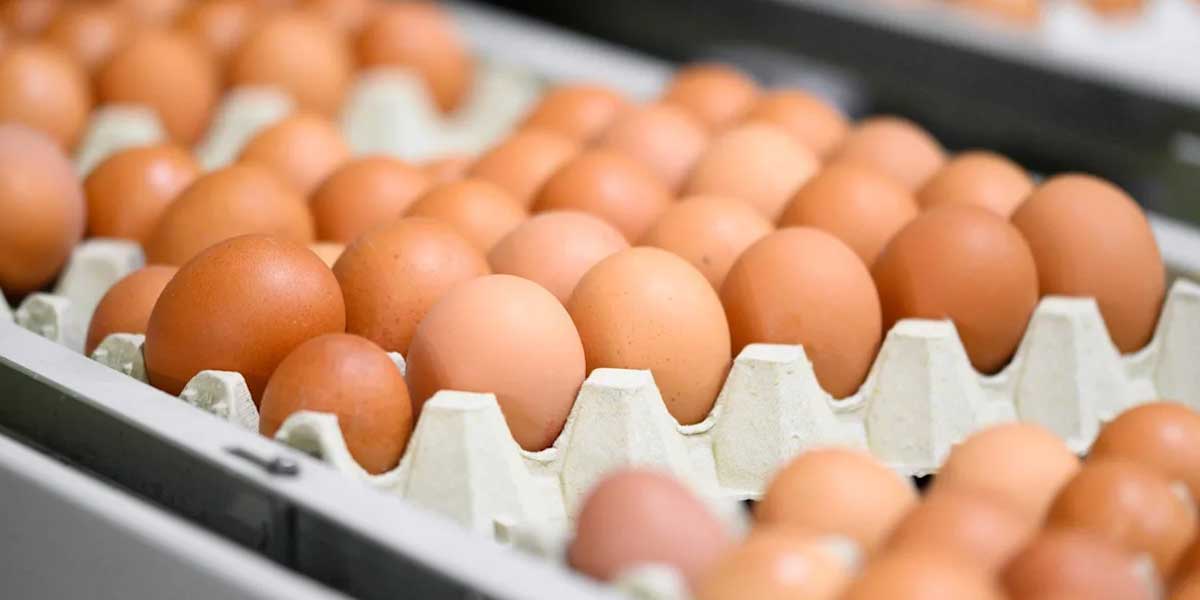
(Photo: Bildagentur Zoonar GmbH/Shutterstock)
Article Information
Comments (0)
LEAVE A REPLY
No comments yet
Be the first to share your thoughts!