
Negros Occidental Backs Itik Growers to Boost Balut Supply
By Dolly Yasa
By Dolly Yasa
BACOLOD CITY – The Negros Occidental provincial government has provided financial aid to Itik growers to help address the shortage of balut supply in the province.
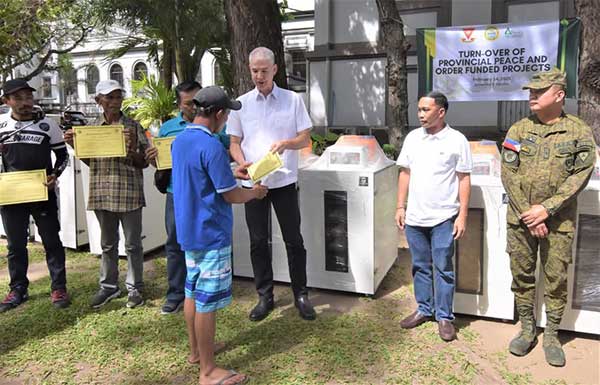
Governor Eugenio Jose “Bong” Lacson and Board Member Jeffrey Tubola led the turnover of financial assistance to 17 Sambayanan Negros volunteers and 10 National Task Force to End Local Communist Armed Conflict (NTF-ELCAC) associations during the weekend.
The Itik Pinas Raising for Balut and Salted Egg Project, implemented through the Provincial Veterinary Office, aims to bridge the gap in balut production, provide livelihood opportunities for farmers and former rebels, and support the province’s food sufficiency initiatives.
The PHP2-million project includes 1,000 breeder ducks, 10 incubators with a 250-egg capacity each, and 127 bags of duck feed (50 kg per bag).
Additionally, PHP342,000 in financial assistance was distributed to Sambayanan Negros volunteers, who serve as community peace and development advocates in various towns and cities.
The turnover ceremony was held at the Provincial Capitol and attended by Brig. Gen. Ted Dumosmog, 303rd Brigade Commander, Provincial Veterinarian Dr. Placeda Lemana, and other officials.
Comments (0)
LEAVE A REPLY
No comments yet
Be the first to share your thoughts!


