Manila Container Terminal Expands, Boosts Efficiency
The Manila International Container Terminal (MICT), the flagship operation of International Container Terminal Services Inc. (ICTSI) and the Philippines’ largest container terminal, continues to invest in capacity expansion, efficiency improvements, and digital transformation. These investments aim to support growing trade volumes and enhance customer service. To meet increasing demand, MICT is constructing Berth 8, designed

By Staff Writer
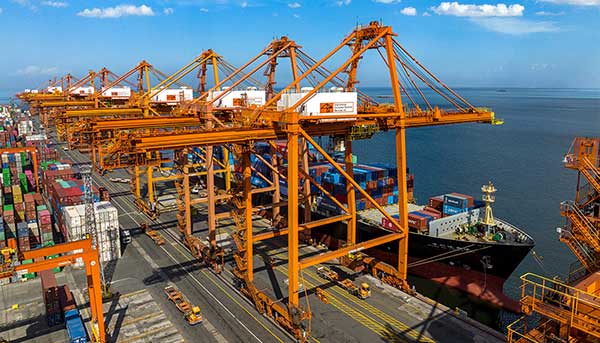
The Manila International Container Terminal (MICT), the flagship operation of International Container Terminal Services Inc. (ICTSI) and the Philippines’ largest container terminal, continues to invest in capacity expansion, efficiency improvements, and digital transformation.
These investments aim to support growing trade volumes and enhance customer service.
To meet increasing demand, MICT is constructing Berth 8, designed for ultra-large container vessels with capacities of up to 18,000 twenty-foot equivalent units (TEUs).
The new berth will add 200,000 TEUs in capacity, raising MICT’s annual volume handling capability to 3.5 million TEUs.
Additional yard space will support the berth while improving maneuverability and yard utilization.
As part of its sustainability strategy, MICT continues to integrate hybrid and near-zero emission equipment into its operations.
The terminal recently deployed eight new zero-emission (NZE) rubber-tired gantries (RTGs), complementing a fleet that is now 83 percent hybrid.
Plans are also underway to acquire electric trucks and establish EV charging infrastructure to further reduce emissions.
ICTSI has committed to cutting greenhouse gas emissions per container move by 26 percent and achieving net-zero emissions by 2050.
Gate operations have been streamlined with 14 automated lanes and six optical character recognition (OCR) portals.
These upgrades have reduced the average truck dwell time to 47.82 minutes, while the pre-truck manifesting gate transaction time has dropped to just 48 seconds.
New equipment deliveries include 43 terminal trailers, 17 skeletal trailers, and 11 tractors.
A new yard management system optimizes container stacking, improves resource allocation, and enhances operational visibility to ease bottlenecks.
To further improve service efficiency, MICT has introduced digital solutions, including the ICTSI App, which provides real-time vessel, container, and truck tracking, billing computation, and electronic interchange receipts.
E-wallet payments allow for automated fee deductions, expediting import clearance and gate-out processing.
SMS notifications alert truck drivers about container hold releases and truck instruction documents upon gate-in.
The terminal has also introduced free Wi-Fi access for truck drivers.
MICT’s expansion and modernization align with the Philippines’ economic goals and reinforce its critical role in logistics and supply chain resilience.
As the busiest container port in the country, MICT consistently ranks among the world’s most efficient terminals.
Ongoing investments in infrastructure, technology, and sustainability underscore its commitment to delivering world-class service and solidifying its status as a key gateway for global trade.
Article Information
Comments (0)
LEAVE A REPLY
No comments yet
Be the first to share your thoughts!