
IPOPHL highlights PH innovation progress at WIPO meet
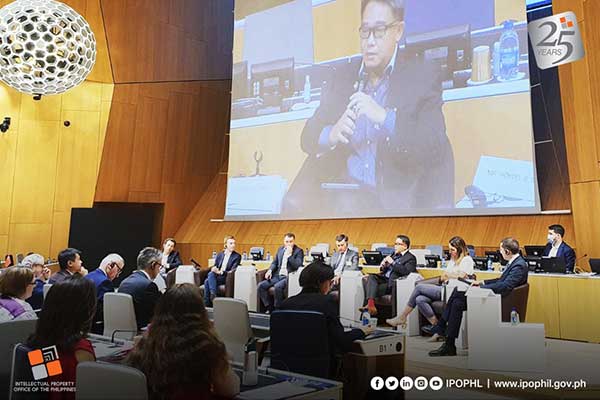
The Intellectual Property Office of the Philippines (IPOPHL) underscored the innovation progress of the Philippines during the 63rd World Intellectual Property Organization’s (WIPO) General Assemblies (GA).
During a July 19 discussion on the role of IP in supporting innovation ecosystems, IPOPHL Director General Rowel S. Barba spoke about the Philippines’ experience in utilizing intellectual property as a tool to build a more progressive and inclusive future in the innovation landscape, especially in the wake of the economic challenges brought about by the COVID-19 pandemic.
“Innovation is more than just a new idea, method or device. It’s about providing relevant and practical solutions to address the challenges faced by our society today,” Barba said at the side event organized by the WIPO Secretariat and the French Patent and Trademark Office.
He pointed out that nearly half of the 77 Innovation and Technology Support Offices (ITSOs) established by IPOPHL in the country have successfully commercialized their IP assets. These ITSOs—which comprise of academic, research and development and support institutions—assist in the creation of IP in the academe and research sectors while also extending technical assistance to entrepreneurs and inventors.
In empowering startups, IPOPHL has been working with the Asian Institute of Management’s Dado Banatao Incubator (or the AIM-DBI) Program to assist startups when drafting patent claims.
“Our innovation strategy also taps into the talent and ingenuity of the youth,” Barba noted, unveiling IPOPHL’s plan to launch the Youth Inventors’, Designers’ and Entrepreneurs’ Incentive Package Program in the future. The program aims to encourage and inspire the youth to create, innovate, protect and commercialize their creations through the IP system.
The IPOPHL chief also reported that the country continues to step up its innovation efforts through a whole-of-government approach. This is most evident in the passage of the Philippine Innovation Act of 2019, with its drafting by legislators and signing by President Rodrigo R. Duterte.
The law aims to guide the country’s innovation goals to strengthen, promote, and develop an innovative and entrepreneurial ecosystem and culture in the Philippines.
“Our country’s legislators understand the critical role that IP plays in innovation,” Barba said.
“When they drafted the Philippine Innovation Act, they included IPOPHL in the roster of government agencies comprising the National Innovation Council. This Council is tasked under the law to draft the Philippines’ long-term innovation agenda,” he added.
Barba emphasized that a key element guiding the innovation progress in the Philippines, based on its needs and development level, is the concept of “Filipinnovation.”
“Filipinnovation refers to the Filipinos’ ingenuity creating new value, a whole-of-nation call, and commitment to pursue the Philippines’ progress through innovation,” Barba explained.
The GA is an annual event that gathers WIPO’s 193 member-states to provide updates on their individual progress and together build cooperation toward future policy directions.
Comments (0)
LEAVE A REPLY
No comments yet
Be the first to share your thoughts!


