
Iloilo City Enforces Heat Stroke Break Policy for Traffic Aides
By Mariela Angella Oladive
By Mariela Angella Oladive
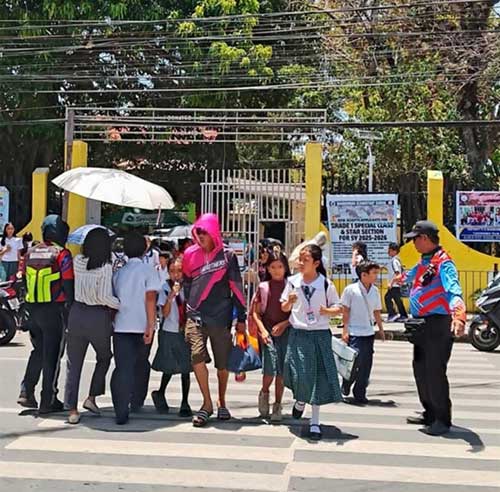
With temperatures on the rise, the Iloilo City Traffic and Transportation Management Office (ICTTMO) has implemented a heat stroke break policy to protect traffic enforcers from extreme heat while on duty.
ICTTMO head Ret. Col. Uldarico Garbanzos said enforcers will be allowed to take 15-minute breaks in shifts to rehydrate and seek shade.
The breaks will be observed twice daily, ideally between 10 a.m. to 11 a.m. and 3 p.m. to 4 p.m., when the heat index typically peaks.
The policy is described as a “humanitarian consideration” for personnel assigned to field duties.
Prolonged exposure to high temperatures increases the risk of heat stroke and other heat-related illnesses, the office emphasized.
Meanwhile, the Philippine Atmospheric, Geophysical and Astronomical Services Administration officially declared the start of the warm and dry season on March 26.
The shift marks the transition from the northeast monsoon (amihan) to easterly winds brought by a high-pressure area over the northwestern Pacific.
PAGASA warned that temperatures are expected to rise further in the coming months, with possible heat waves lasting until May.
While hotter conditions will prevail in most areas, isolated thunderstorms may still occur.
The agency urged the public to stay hydrated, take precautions against heat-related illnesses, and conserve water.
Comments (0)
LEAVE A REPLY
No comments yet
Be the first to share your thoughts!


