
Health office calls for home cleanups as dengue cases rise
By Joseph Bernard A. Marzan
By Joseph Bernard A. Marzan
The Iloilo City Health Office (CHO) on Wednesday advised the public to conduct cleanups of their residential premises, after finding stagnant water in these places contributing to the rise of dengue cases in several barangays.
CHO data logged 326 cases from January 1 to July 4 this year with 8 active cases, 315 recoveries, and 3 deaths. More of these cases were males (170) than females (156).
The data also indicated a 54 percent increase compared to the same period last year, but the CHO was unable to provide the exact number.
Clustering or consecutive rise in cases were detected in the barangays of Calaparan, Calumpang, Camalig, Lanit, Santo Niño Norte, Santa Filomena, and Tabuc Suba Jaro.
Dengue deaths this year include a 15-year-old and a 9-year-old, both males from Arevalo district, and a 28-year-old male from Mandurriao district.
Dengue is a viral infection spread by insects, most notably the Aedes aegypti mosquito species. Mosquitoes breed in stagnant water, even dirty or muddy puddles.
The World Health Organization stated in March that dengue infects at least 100 to 400 million people a year.
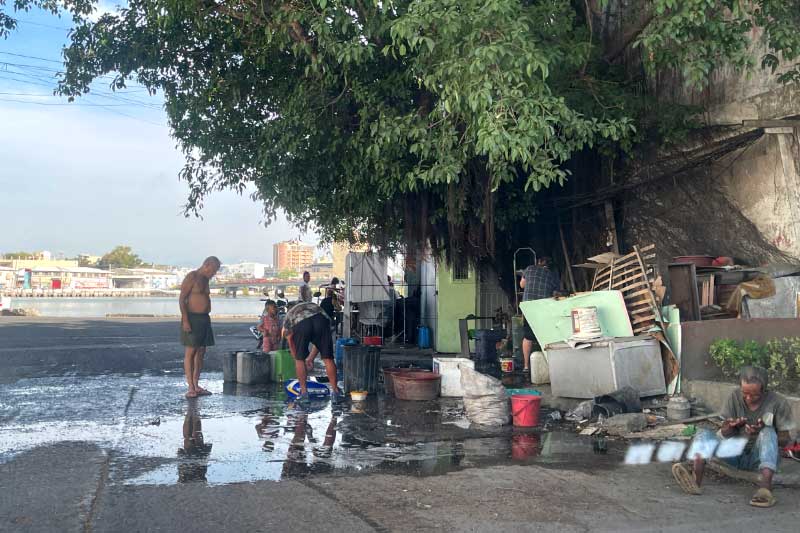
Dr. Roland Jay Fortuna of the CHO said in a press conference that upon inspection, they determined that the patients were from areas with stagnant water not just in public places, but also some homes of those infected.
“Two of the houses [in Lanit, Jaro] had jetmatic pumps in their homes, and the stagnant water was found beside these pumps. […] There was also an unused toilet bowl which also had [stagnant] water. There is lush vegetation here because they have many vegetable plants, plus some garbage also at the side of the house. There are also areas like big puddles in Lanit. There are dark places where insects brood,” Fortuna said.
But Fortuna said they cannot yet declare a dengue outbreak as they have not yet reached the 70 percent alert threshold.
The alert level threshold for dengue is based on a 3-year average of the number of cases. If the cases hit 70 percent of the 3-year average, the local government can declare an outbreak.
He said that the CHO will be intensifying its campaign, enjoining the barangays to clean up their surroundings, and zeroing in on places where insects may breed in.
“We are emphasizing that the [CHO] is continuing distributing larvicide [and] misting, but if we don’t stop the breeding sites, [dengue] will continue. We can only stop [dengue] if everyone cooperates in cleaning their surroundings,” he said.
Comments (0)
LEAVE A REPLY
No comments yet
Be the first to share your thoughts!


