Coconut residue offers a cost-effective source of prebiotics for aquaculture
‘Sapal,’ the coconut meat residue, is emerging as a low-cost source of mannooligosaccharides (MOS), a widely used prebiotic in aquaculture. MOS has been proven effective in improving growth, disease resistance, and overall health of aquaculture species such as milkfish and tilapia. A by-product

By Rizza B. Ramoran, Mark Anthony A. Badua, and Leo Joseph Labitag

By Rizza B. Ramoran, Mark Anthony A. Badua, and Leo Joseph Labitag
‘Sapal,’ the coconut meat residue, is emerging as a low-cost source of mannooligosaccharides (MOS), a widely used prebiotic in aquaculture. MOS has been proven effective in improving growth, disease resistance, and overall health of aquaculture species such as milkfish and tilapia.
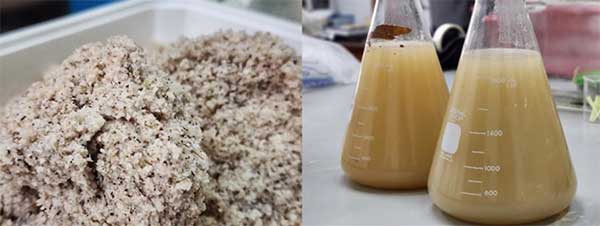
A by-product of coconut milk extraction in virgin coconut oil production or household use, sapal is rich in dietary fiber. It contains trace amounts of protein, fats, and essential minerals like potassium and magnesium. It is also an ideal raw material for MOS production since 87% of its fiber is made of mannan polysaccharides, which is the basic ingredient for MOS.
Implemented by the University of the Philippines Los Baños (UPLB), the project, “Mannan Oligosaccharides (MOS) Prebiotic Feed Ingredient for Aquafeeds from Bioprocessed Coconut Residue,” aims to utilize sapal for cost-efficient MOS production.
The project employs solid-state fermentation with a mannanase-producing microorganism to transform sapal into MOS-rich prebiotic product for aquafeed formulations. The project is funded by the Philippine Council for Agriculture, Aquatic and Natural Resources Research and Development of the Department of Science and Technology (DOST-PCAARRD)
The initiative addresses the rising demand for sustainable and antibiotic-free aquaculture practices by offering MOS as a viable alternative. With global restrictions on therapeutic antibiotic use in aquaculture, MOS supplements can play a crucial role in improving fish health and pathogen resistance while promoting environmental sustainability.
Now in its second year, the project has achieved several milestones, including optimizing the bioprocessing of sapal, identifying a suitable microbial strain, and demonstrating the prebiotic activity of the extracted MOS. A high-purity MOS powder can now be produced successfully through fermentation and extraction processes.
MOS from bioprocessed sapal has a positive prebiotic activity score, for its ability to support and promote probiotic microorganisms growth in fish guts. It also enhanced the survival rate of milkfish fry that are exposed to Vibrio parahaemolyticus by 80%. In a challenge test, milkfish fry supplemented with the MOS from sapal were more likely to survive compared to those without the supplement.
With these advancements, the project highlights the potential of sapal as an economical and sustainable substrate to produce MOS.
By transforming a common agricultural by-product into a high-value feed additive, this initiative not only improves fish health but also reduces the aquaculture industry’s dependence on therapeutic antibiotics. (DOST-PCAARRD S&T Media Services)
Article Information
Comments (0)
LEAVE A REPLY
No comments yet
Be the first to share your thoughts!