
Bacolod Cops Told to Avoid Duterte Arrest Comments
By Glazyl M. Jopson
By Glazyl M. Jopson
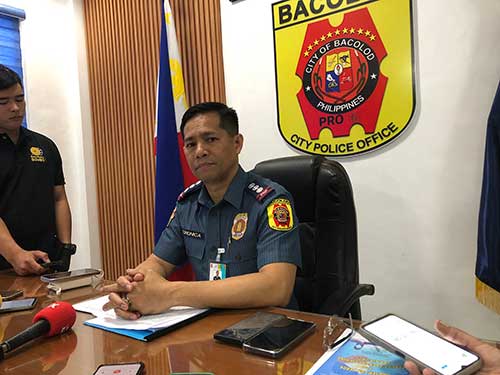
BACOLOD CITY – Police Col. Joeresty Coronica, director of the Bacolod City Police Office (BCPO), said the city’s police force remains apolitical amid controversy over the recent arrest of former President Rodrigo Duterte.
Coronica advised his personnel to avoid political discussions.
“Refrain from commenting on former President Duterte,” he told BCPO personnel.
In a media interview Tuesday, Coronica also reminded officers there is no need to express their sentiments about the former leader.
“Whatever our sentiments, we have to keep them to ourselves,” he said.
Coronica added that BCPO personnel morale remains high.
The Philippine National Police (PNP) said Tuesday that a policeman who recently went viral online is facing an inciting to sedition complaint over social media posts responding to Duterte’s arrest.
In a statement, the PNP emphasized its zero tolerance for political bias within its ranks. It reminded personnel to remain apolitical and uphold ethical standards in both their official duties and personal lives, including on social media.
The International Criminal Court (ICC) has issued an arrest warrant for Duterte on charges of crimes against humanity related to his anti-drug campaign.
The former president is currently detained at The Hague in the Netherlands.
Comments (0)
LEAVE A REPLY
No comments yet
Be the first to share your thoughts!


