
Ateneo Scientists Investigate Bangus Skin For Treating Severe Burns
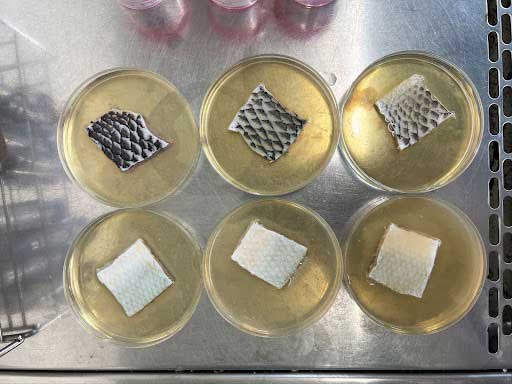
Pioneering research from the Ateneo de Manila University could turn bangus fish skin—a common byproduct of the Philippine fishing industry, often discarded as waste—into an invaluable medical resource.
The Ateneo scientists found that milkfish (Chanos chanos, better known as “bangus” in the Philippines) could give doctors an economical way to treat patients with massive burns and other major injuries.
While not meant as a home remedy, wound dressings made from fish skin may become a cost-effective and vital tool for doctors in developing countries like the Philippines.
When a person’s skin is severely damaged—such as in a large third-degree burn, where all skin layers are affected—doctors may dress the wound with an artificial skin to protect exposed tissues and to promote the healthy growth of the patient’s own skin cells. This groundbreaking Ateneo study is the first time that bangus skin has been eyed for this purpose, whereas previous studies have used tilapia (Oreochromis niloticus).
As bangus is commonly raised and sold all across the Philippines, this research holds major implications for healthcare in the country: it offers the possibility of an affordable and sustainable wound care method that also potentially reduces reliance on imported medical materials. And since fish skin is often discarded as waste, this research also promotes environmental sustainability.
“Among the economically significant fish species in the Philippines, bangus is one of the most widely cultivated. However, limited research has been conducted on the suitability of milkfish skin for wound care,” the researchers said in their paper.
“Given its abundance and potential collagen content, milkfish skin presents a valuable opportunity to expand the donor pool for fish skin grafting,” they added.
The Ateneo scientists compared bangus and tilapia skins collected from a local market in Metro Manila, making sure that these were fresh and free from impurities. The skins were descaled, rinsed with saltwater, and cut into uniform strips. Some of the fish skin samples were then sterilized in a solution of silver nanoparticles (AgNP); the untreated skins served as control samples.
AgNP-treated bangus samples consistently showed complete inhibition of bacterial and fungal growth, and close inspection under a microscope also revealed that bangus skin retained its collagen structural integrity just as well as tilapia skin.
“By demonstrating that milkfish skin can be effectively sterilized and used similarly to tilapia skin, this research provides innovative, cost-effective, and sustainable wound-healing solutions. This finding has the potential to transform wound care in underserved areas, improving patient outcomes in regions with limited access to advanced medical facilities,” the paper concluded.
The paper, “Determining the Applicability of Milkfish (Chanos chanos) for Skin Grafting through Microbiological and Histological Evaluations,” by Dr. Janice Ragaza and Bianca Patrice Go of the Ateneo de Manila University School of Science and Engineering Department of Biology’s Aquatic and Fisheries Resources Laboratory, was published in BIO Web of Conferences in November 2024.
SOURCE: https://archium.ateneo.edu/aquatic-fisheries-resources/1/
Comments (0)
LEAVE A REPLY
No comments yet
Be the first to share your thoughts!
Related Articles

‘IG-AMPO NIÑO CAMI’: What 8 Iloilo Spanish-era cemeteries reveal about the past
ILOILO CITY — Cemeteries are often regarded as places of mourning and remembrance, especially during Undas on Nov. 1 and 2, when families gather to honor departed loved ones. But beyond the tombstones and burial plots, these spaces also hold stories of faith, artistry, craftsmanship, and community life. A new book

Undas in Iloilo: Pack water, guard phones, skip jewelry
ILOILO CITY — Up to 350,000 people are expected to visit Iloilo City cemeteries from Oct. 31 to Nov. 3. City and provincial authorities are tightening security and warning visitors against theft, heat-related illnesses, dehydration, and dengue. This year, All Saints’ Day falls on Sunday, Nov. 1,

GenSan co-op takes Negros Power route with Ignite joint venture
By Francis Allan L. Angelo GENERAL SANTOS CITY — Member-consumer-owners (MCOs) of the South Cotabato II Electric Cooperative Inc. (SOCOTECO II) have approved a conditional joint venture agreement (CJVA) with Ignite Power and Energy Holdings Inc., clearing the first hurdle for a private-led company to take over and modernize the cooperative’s power distribution network. The